
🔴 The BBC’s Social Media Stagnation
Despite its vast reach, BBC News ranks last for engagement among major UK publishers in 2026. Scale isn’t translating into interaction - and performance has flatlined.
Ownership: State owned
Followers (Jan 1st 2026): 61.3 million
Rank (UK): 13th
Performance: Very Poor
Despite its status as a global journalistic powerhouse, the BBC faces a growing disconnect between its editorial impact and its social media resonance. Under the leadership of Deborah Turness, CEO of BBC News and Current Affairs, and Richard Burgess, Director of News Content, the corporation continues to produce world-class journalism. However, the broadcaster has struggled to translate this prestige into the high-engagement metrics seen by its commercial rivals.
Editorial Impact: Investigating Institutions
In 2025, the BBC’s “on-the-ground” journalism remained a catalyst for national reform. Two major investigations stood out for their immediate real-world consequences:
- The Leeds Maternity Scandal: BBC News exposed a systemic clinical failure at Leeds Teaching Hospitals NHS Trust sparking an immediate external review into the Trust’s maternity services.
- The Charing Cross Undercover Probe: A Panorama investigation, led by an undercover reporter at Charing Cross police station, captured evidence of institutional racism and misogyny. The broadcast led to the immediate suspension and subsequent firing of several officers, once again putting the Metropolitan Police under intense scrutiny.
The Engagement Gap
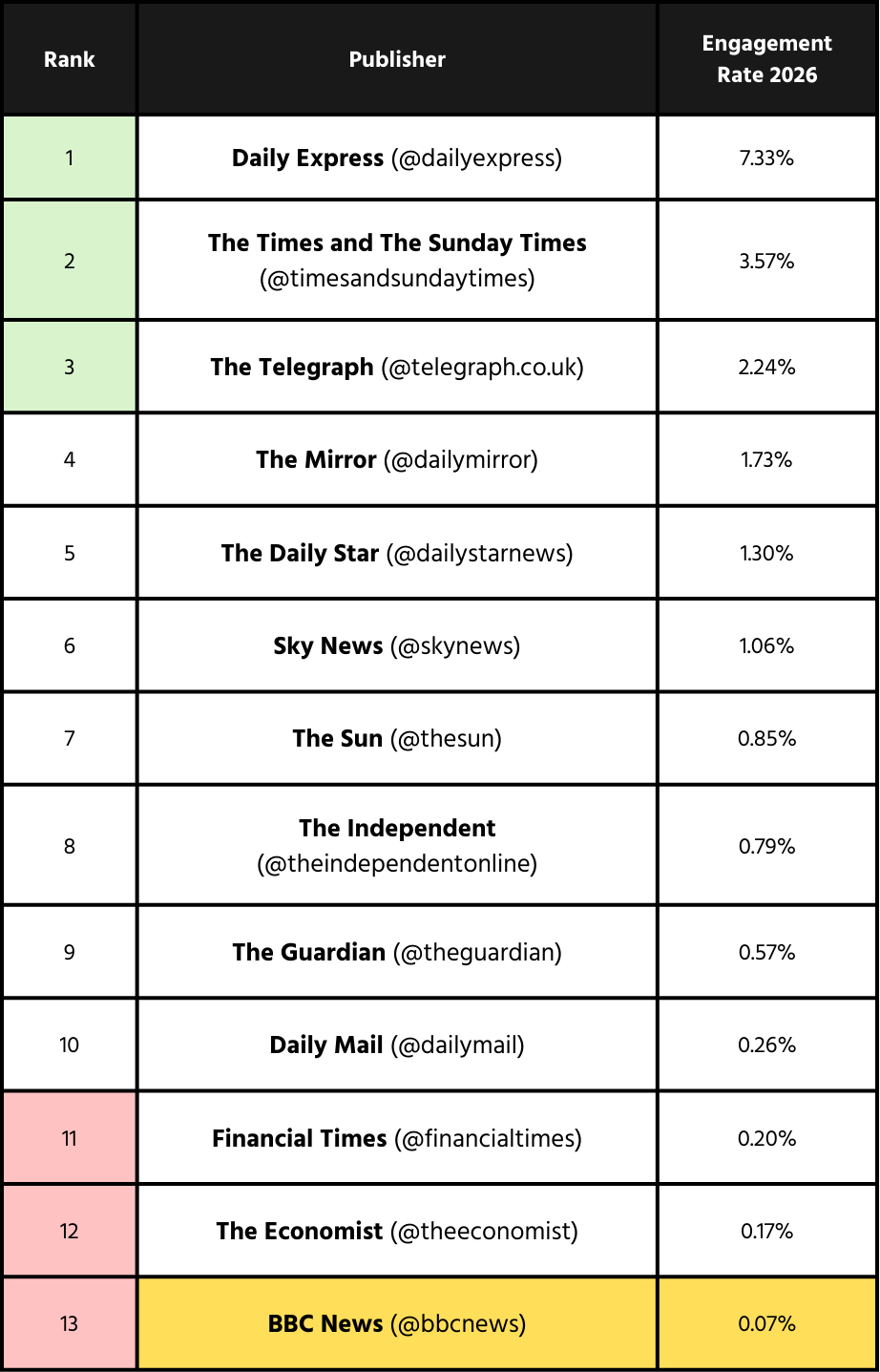
While the journalism is potent, the digital delivery is faltering. According to 2026 audience data, the BBC ranks at the bottom of the UK news publisher engagement table.This “flatline” performance is particularly striking given the reach of the BBC News App, which remains the most used news application in the country with 15 million users. The data suggests that while the British public still relies on the BBC as a primary utility, they are not interacting with its content on third-party social platforms.
The "Youth" Problem
The stagnation corresponds to a broader demographic challenge. The BBC’s commitment to "impartiality" and "utility" often clashes with the personality-driven, high-octane content that thrives on these algorithms.
While commercial rivals like the Daily Express have tripled their engagement by leaning into polarizing or viral topics, the BBC remains tethered to a traditional broadcast style that appears to be losing the "attention economy" among Gen Z and Millennial cohorts.
Top Performing Post
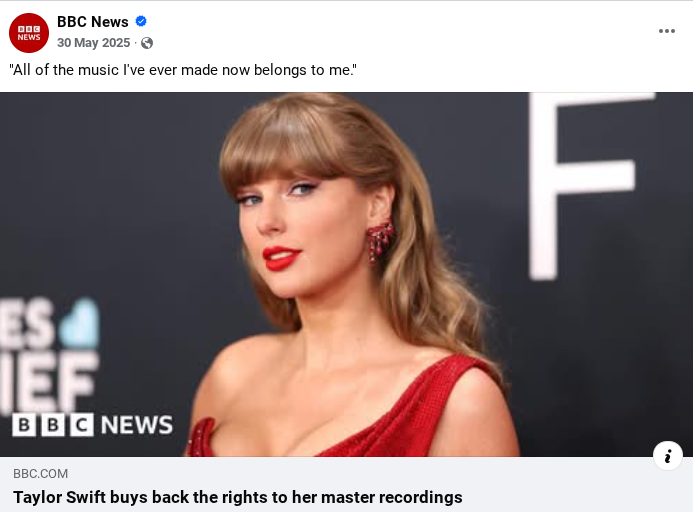

💬 Comments: 5.8k
📱Reactions, Comments and Shares: 155k
📈 Post Interaction Rate: 0.25%